
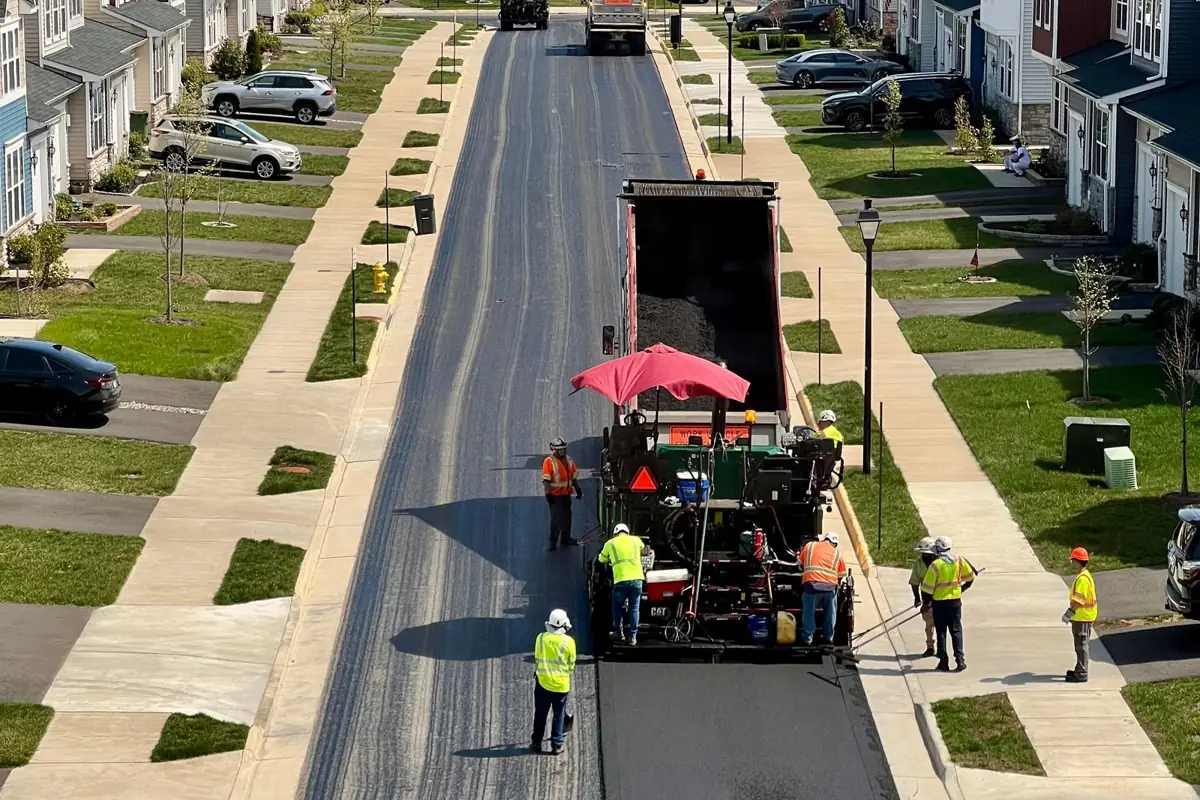
Short answer: resurfacing lays a new asphalt layer over existing pavement whose base is still sound. It costs well under full replacement, roughly $1.50–$3 per square foot at driveway scale and usually less per square foot on larger lots, as an estimate.
Is your pavement a resurfacing candidate?
Resurfacing works when the problems are on top: faded gray asphalt, small cracks, raveling (loose stones on the surface) and minor unevenness. If large areas are alligator-cracked or soft underfoot, those sections need repair or full replacement first, or the overlay will crack right above them.
Why we mill before overlaying
Adding asphalt on top raises the surface. Next to curbs, gutters, drains and building entrances that extra height causes trouble: water sheets toward doors, curbs shrink, and ADA transitions get too steep. Milling grinds off the worn top layer first so the new surface finishes at the right height. On open areas we may overlay without milling; on edges we usually mill.
The steps
- Repair failed areas and seal larger cracks.
- Mill edges, transitions and high spots.
- Clean and apply a tack coat so the new layer bonds.
- Pave and compact the overlay, then stripe.
These prices are estimates. Milling is priced with the overlay based on depth and area. See the price guide.
Questions
How long does an overlay last?
It depends on the base underneath, traffic and how well it's maintained. Sealcoating and crack sealing on schedule make a big difference in Florida sun.
Do you recycle the milled asphalt?
Milled asphalt is commonly recycled into new mix or used as base material rather than landfilled.
Can you resurface a driveway?
Yes, if the base is sound. Otherwise we'll recommend replacement.